Hospital Information Systems (HIS): A Comprehensive Engineering Study of Architecture, Interoperability, Data Governance, and Digital Transformation in Healthcare

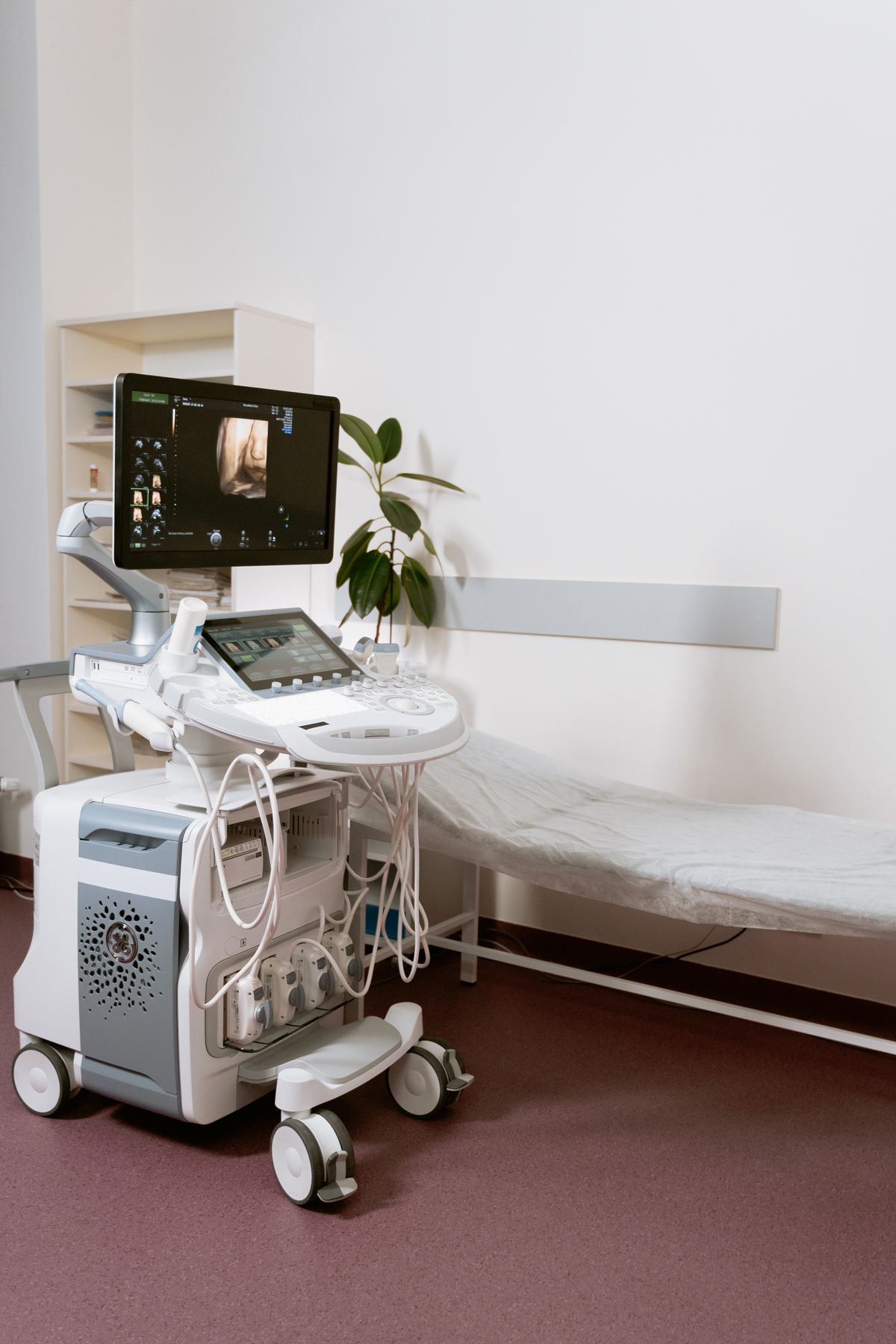
Figure 1: Modern Hospital Information Systems integrate clinical, administrative, and financial workflows into a unified digital ecosystem.
---
1. Introduction: The Engineering Complexity of Healthcare Information Systems
Hospital Information Systems (HIS) represent one of the most complex domains in software engineering and information systems design. Unlike enterprise resource planning (ERP) systems for manufacturing or finance, HIS must simultaneously serve clinical decision-making (where errors can be fatal), regulatory compliance (HIPAA, GDPR, FDA, CE-MDR), financial billing (multi-payer, multi-jurisdiction), and operational logistics (supply chain, bed management, staff scheduling) — all while maintaining sub-second response times for clinicians working in high-pressure environments.
The fundamental engineering challenge of HIS lies in the intersection of three inherently conflicting requirements:
- Data completeness and granularity: Clinical decisions require comprehensive patient data — lab results, imaging, medications, allergies, vital signs, clinical notes — available in real-time.
- Privacy and security: The same data is subject to stringent privacy regulations with severe penalties for breaches (HIPAA violations can reach $1.5M annually per violation category).
- Interoperability: Data must flow seamlessly across departmental systems (radiology, laboratory, pharmacy, nursing) and external entities (insurance, public health, referral networks) using standardized protocols.
A typical HIS database contains 2,000–5,000 tables with 10,000–50,000 relationships, compared to 200–500 tables for a standard ERP system. This complexity drives unique architectural decisions in database design, API layering, and system integration.
---
2. HIS Architecture: From Monolithic to Microservices
2.1 The Monolithic Legacy Era
First-generation HIS systems (1970s–1990s) were monolithic mainframe or client-server applications. Systems like MUMPS (Massachusetts General Hospital Utility Multi-Programming System), later evolved into Caché and InterSystems IRIS, used hierarchical and multi-dimensional data models rather than relational databases. MUMPS was remarkably efficient for clinical data:
- Write performance: O(1) for key-value storage using global arrays
- Read performance: O(log n) for indexed retrieval
- Concurrency: Built-in transaction processing with ACID guarantees
The limitation was scalability. As hospitals grew and merged into health networks, monolithic HIS could not scale horizontally. Vertical scaling hit diminishing returns:
$$C_{scaling} = \alpha \cdot S_{vertical}^{\beta}, \quad \beta < 1$$
Where $C_{scaling}$ is effective capacity, $S_{vertical}$ is server resources, and $\beta$ is the scaling efficiency factor (typically 0.6–0.8 for database-bound systems).
2.2 Service-Oriented Architecture (SOA) and HL7 Integration
The second generation (2000s–2010s) adopted SOA with HL7 v2.x messaging as the integration backbone. HL7 v2 uses a pipe-delimited message format:
MSH|^~\&|HIS|HOSPITAL|LIS|LAB|20260724120000||ORM^O01|MSG00001|P|2.5
PID|||PATID1234^^^HOSPITAL||DOE^JOHN^A||19800515|M
OBR|1||ORD12345|GLU^GLUCOSE^L
The message throughput calculation for an interface engine is:
$$T_{engine} = \frac{N_{messages} \times \bar{S}_{msg}}{W_{parallel} \times R_{process}}$$
Modern interface engines (Mirth Connect, Rhapsody, InterSystems IRIS) handle 5,000–50,000 messages/sec with proper tuning.
2.3 Cloud-Native Microservices Architecture
Contemporary HIS (2020s+) adopt cloud-native microservices:
$$\text{HIS} = \sum_{i=1}^{n} M_i + \text{API Gateway} + \text{Event Bus} + \text{Shared Data Lake}$$
Each microservice $M_i$ owns its database (polyglot persistence) and communicates via REST/gRPC APIs or event-driven messaging (Apache Kafka, RabbitMQ). Service decomposition follows clinical domains:
- Patient Registration Service → PostgreSQL (relational integrity)
- Clinical Documentation Service → Document store (MongoDB for narrative notes)
- Laboratory Service → Time-series database (InfluxDB for lab trends)
- Imaging Service (PACS/RIS) → Object storage (S3 + DICOM metadata in PostgreSQL)
- Pharmacy Service → Relational with ACID (drug interactions require transactional integrity)
- Billing Service → Relational with audit trail
- Analytics Service → Columnar store (ClickHouse/BigQuery for OLAP)
2.4 CQRS and Event Sourcing in HIS
Clinical audit requirements make event sourcing particularly suitable. In CQRS with event sourcing:
$$State_t = \text{fold}(apply, \emptyset, [E_1, E_2, \ldots, E_t])$$
Every state change is an immutable event, providing complete audit trail, temporal queries ("What was the patient's medication list on July 15?"), and regulatory compliance by design.
---
3. Interoperability Standards and Protocols
3.1 HL7 FHIR: The Modern RESTful API
Fast Healthcare Interoperability Resources (FHIR) is HL7's modern standard based on RESTful APIs and JSON/XML serialization. FHIR defines ~150 resource types with standardized data elements.
A FHIR Patient resource in JSON:
{
"resourceType": "Patient",
"id": "example",
"identifier": [{"system": "urn:oid:1.2.36.146.595.217.0.1", "value": "PATID1234"}],
"name": [{"use": "official", "family": "Doe", "given": ["John"]}],
"gender": "male",
"birthDate": "1980-05-15"
}
FHIR API operations follow REST conventions:
GET /Patient/{id}— Read patientPOST /Patient— Create patientGET /Patient?name=Doe&birthdate=1980— Search
The FHIR search specification supports complex queries with chained parameters. Query parsing complexity is:
$$Q_{complexity} = O(n \cdot m \cdot k)$$
Where $n$ is the number of search parameters, $m$ is the number of chained joins, and $k$ is the number of resource references to resolve.
3.2 DICOM: Medical Imaging Standard
DICOM is the standard for medical image storage and transmission. Each DICOM file contains a file meta header and a data set of tagged elements. DICOM network communication uses DIMSE services: C-STORE, C-FIND, C-MOVE, C-GET.
The storage calculation for a PACS archive:
$$S_{PACS} = \sum_{i=1}^{N_{studies}} \sum_{j=1}^{N_{series}} \sum_{k=1}^{N_{instances}} S_{instance}(i,j,k)$$
A typical CT study contains 100–500 slices at 512×512×16 bits ≈ 524 KB per slice. Annual storage for a 500-bed hospital:
$$S_{annual} \approx 250{,}000 \text{ studies} \times 50 \text{ MB avg} = 12.5 \text{ TB/year}$$
With 7-year retention, the archive reaches ~87.5 TB, requiring tiered storage (SSD for hot data, HDD for warm, tape/cloud for cold).
3.3 IHE Integration Profiles
Integrating the Healthcare Enterprise (IHE) defines integration profiles specifying how standards work together:
- XDS (Cross-Enterprise Document Sharing): Document registry/repository architecture
- PIX/PDQ: Patient identity management
- SWF (Scheduled Workflow): Order scheduling and result reporting
The XDS model: Document Source → Document Repository → Document Registry → Document Consumer. This separation enables federated document sharing across healthcare enterprises.
---
4. Clinical Decision Support Systems (CDSS)
4.1 Knowledge Representation
Rule-based systems use IF-THEN rules with clinical context:
$$\text{IF } (C_1 \wedge C_2 \wedge \ldots \wedge C_n) \text{ THEN } A$$
Bayesian networks model probabilistic relationships between diseases and findings:
$$P(D|F) = \frac{P(F|D) \cdot P(D)}{\sum_{i} P(F|D_i) \cdot P(D_i)}$$
Where $D$ is a disease, $F$ is a finding, and the network encodes conditional probabilities. Bayesian networks can perform diagnostic reasoning with incomplete data — essential in clinical settings.
4.2 Machine Learning-Based CDSS
The ML pipeline for clinical prediction:
$$\text{Raw EHR Data} \xrightarrow{\text{ETL}} \text{Feature Matrix} \xrightarrow{\text{Model Training}} \text{Predictive Model} \xrightarrow{\text{Inference API}} \text{Clinical Alert}$$
| Task | Model Type | Key Metric | Typical Performance |
|---|---|---|---|
| Sepsis prediction | XGBoost | AUC-ROC | 0.85–0.92 |
| 30-day readmission | Random Forest | AUC-ROC | 0.70–0.78 |
| Mortality risk (ICU) | LSTM | AUC-ROC | 0.82–0.90 |
| Drug-drug interaction | Knowledge Graph + NLP | Precision | 0.88–0.95 |
Sepsis has a mortality increase of 7.6% per hour of delayed treatment. A model with 85% sensitivity and 90% specificity in a 500-bed hospital generates ~1,500 alerts/month, with ~1,458 false positives — creating alert fatigue. Mitigation strategies include tiered alerting, contextual suppression, adaptive thresholds, and human-in-the-loop design.
4.3 CDSS Latency Requirements
| Action | Maximum Latency | Rationale |
|---|---|---|
| Drug interaction check | < 200 ms | Must complete before order submission |
| Allergy alert | < 100 ms | Safety-critical, pre-order |
| Diagnostic suggestion | < 2 sec | Acceptable during clinical review |
The response time budget for a drug interaction check:
$$T_{total} = T_{network} + T_{auth} + T_{query} + T_{rule\_eval} + T_{response}$$
With optimized database indexing and in-memory rule caches (Redis), total latency of ~170 ms is achievable.
---
5. Security, Privacy, and Regulatory Compliance
5.1 The HIPAA Security Framework
The HIPAA Security Rule defines administrative, physical, and technical safeguards. The risk assessment model:
$$R = \sum_{i=1}^{N_{threats}} P(T_i) \times I(T_i) \times V(T_i)$$
Where $R$ is total risk, $P(T_i)$ is threat probability, $I(T_i)$ is impact, and $V(T_i)$ is vulnerability. Risk mitigation reduces vulnerability through controls:
$$R_{mitigated} = \sum_{i=1}^{N} P(T_i) \times I(T_i) \times V(T_i) \times (1 - C_i)$$
5.2 Encryption and Access Control
HIS encryption spans three layers:
- Data at rest: AES-256 with TDE. Performance impact with AES-NI: 2–5% overhead.
- Data in transit: TLS 1.3 with mutual authentication.
- Data in use: Homomorphic encryption and secure enclaves (Intel SGX) for analytics on encrypted data. Current overhead: $10^3$ to $10^6 \times$ plaintext processing time.
5.3 Role-Based Access Control (RBAC) in Healthcare
Healthcare RBAC is more complex than enterprise RBAC due to clinical context:
$$A(u, r, p, c) = f(role(u), relation(u, p), location(u), shift(u), purpose(c))$$
Where $u$ is the user, $r$ is the resource, $p$ is the patient, and $c$ is the clinical context. This is implemented via policy engines (XACML) that evaluate role, relationship, location, shift, and purpose before granting access.
5.4 Audit Logging and Breach Detection
Audit log volume for a 500-bed hospital:
$$V_{audit} = 3{,}000 \text{ users} \times 200 \text{ actions/day} \times 500 \text{ bytes} = 300 \text{ MB/day} = 109.5 \text{ GB/year}$$
Breach detection uses statistical anomaly detection:
$$Z = \frac{x - \mu}{\sigma}$$
Access patterns with $|Z| > 3$ trigger investigation. Advanced approaches use LSTM autoencoders for multi-dimensional anomaly detection.
---
6. Performance Engineering and Scalability
6.1 Workload Characterization
HIS workloads are characterized by mixed OLTP/OLAP, diurnal patterns, burst traffic, and long-running queries. Peak load for a 500-bed hospital:
$$L_{peak} = 1{,}500 \text{ concurrent users} \times 5 \text{ tx/min} \times 1.5 = 187.5 \text{ TPS}$$
This is modest compared to e-commerce, but criticality is much higher — a 30-second outage during an ED trauma case is unacceptable.
6.2 Database Optimization
Multi-dimensional indexing serves different access patterns:
- Patient-centric: composite index on (patient_id, timestamp)
- Provider-centric: composite index on (provider_id, encounter_date)
- Text search: PostgreSQL GIN indexes on tsvector for clinical notes
6.3 Caching Strategy
Multi-tier caching: L1 (application cache) → L2 (Redis) → L3 (database). With 90% cache hit ratio, database load is reduced by 90%, enabling 10× more concurrent users.
6.4 High Availability and Disaster Recovery
HIS availability targets: 99.99% uptime (52.6 min downtime/year), RPO < 15 min, RTO < 30 min.
With redundant nodes per tier:
$$A_{tier} = 1 - (1 - A_{node})^N$$
With 2 nodes at 99.99% each: $A_{tier} = 1 - 0.0001^2 \approx 99.999999\%$
Disaster recovery uses synchronous replication (local DR, zero data loss), asynchronous replication (remote DR, seconds lag), and cloud backup with cross-region replication.
---
7. Queue Theory and Hospital Operations
Hospital operations involve multiple queuing systems (ED triage, radiology, OR scheduling). The M/M/c queue model applies:
- Poisson arrivals with rate $\lambda$
- Exponential service with rate $\mu$
- c servers (beds, machines, staff)
Key performance metrics:
$$\rho = \frac{\lambda}{c \cdot \mu} \quad \text{(utilization)}$$
$$L_q = \frac{\rho^c \cdot \lambda \cdot \mu}{c! \cdot (c\mu - \lambda)^2} \cdot P_0 \quad \text{(queue length)}$$
$$W_q = \frac{L_q}{\lambda} \quad \text{(waiting time)}$$
Where $P_0$ is the probability of an empty system. ED wait time optimization uses these models to determine optimal staffing levels. When $\rho \to 1$, queue length grows unbounded — the system must maintain $\rho < 0.8$ for acceptable performance.
---
8. Financial Systems and Revenue Cycle Management
8.1 Billing Complexity
Healthcare billing is significantly more complex than other industries due to:
- Multi-payer systems (insurance, government, self-pay)
- Coding standards (ICD-10, CPT, HCPCS, DRG)
- Claim adjudication workflows
- Denial management and appeals
The revenue cycle can be modeled as:
$$\text{Patient Encounter} \rightarrow \text{Coding} \rightarrow \text{Claim Submission} \rightarrow \text{Adjudication} \rightarrow \text{Payment} \rightarrow \text{Reconciliation}$$
Each step has failure modes. The clean claim rate (claims accepted on first submission) is:
$$CCR = \frac{N_{accepted}}{N_{submitted}} \times 100\%$$
Typical CCR ranges from 75–95%. Each denied claim costs $25–$118 in rework. For a hospital with 500,000 claims/year at 80% CCR:
$$C_{denial} = 500{,}000 \times 0.20 \times \$75 = \$7.5M \text{ annual rework cost}$$
8.2 DRG-Based Reimbursement
Diagnosis-Related Groups (DRG) classify hospital cases into groups with similar clinical characteristics and costs. Reimbursement is fixed per DRG, creating incentives for efficiency:
$$R_{DRG} = \text{Base Rate} \times \text{DRG Weight} \times (1 + IME + DSH)$$
Where IME is the Indirect Medical Education adjustment and DSH is the Disproportionate Share Hospital adjustment. HIS must accurately assign DRGs using clinical data, with coding errors directly impacting revenue.
---
9. Emerging Technologies and Future Directions
9.1 Artificial Intelligence in Healthcare
AI applications in HIS are expanding rapidly:
- Natural Language Processing: Extracting structured data from clinical narratives. Transformer models (ClinicalBERT, GatorTron) achieve F1 scores of 0.85–0.92 for entity extraction.
- Computer Vision: Radiology AI for detection (CT, MRI, X-ray). FDA-approved AI algorithms exceed radiologist sensitivity for certain conditions.
- Predictive Analytics: Readmission risk, no-show prediction, resource demand forecasting.
- Generative AI: Clinical note summarization, patient education materials, discharge instructions.
9.2 Blockchain for Health Data Exchange
Blockchain enables decentralized, tamper-proof health record exchange. The key properties:
$$\text{Blockchain HIS} = \text{Distributed Ledger} + \text{Smart Contracts} + \text{Off-chain Storage}$$
Patient-controlled access via smart contracts eliminates central data repositories. However, blockchain throughput limitations (10–20 tx/sec for public chains) require off-chain storage with on-chain metadata hashes.
9.3 Internet of Medical Things (IoMT)
Connected medical devices (wearables, bedside monitors, infusion pumps) generate continuous data streams. The IoMT data pipeline:
$$\text{Device} \xrightarrow{\text{MQTT/HL7}} \text{IoT Gateway} \xrightarrow{\text{Kafka}} \text{Stream Processor} \xrightarrow{\text{FHIR}} \text{EHR}$$
Edge computing on IoT gateways enables real-time alerting (e.g., arrhythmia detection) without cloud round-trip latency. Data volume from IoMT:
$$V_{IoMT} = N_{devices} \times R_{sampling} \times S_{sample} \times T_{duration}$$
A 500-bed ICU with 10 devices/bed at 1 Hz sampling and 100 bytes/sample:
$$V_{ICU} = 5{,}000 \times 1 \times 100 \times 86{,}400 = 43.2 \text{ GB/day}$$
9.4 Telemedicine and Remote Monitoring
COVID-19 accelerated telemedicine adoption. HIS must integrate telehealth platforms with scheduling, documentation, billing, and clinical data. The technical requirements include:
- Real-time video: WebRTC with < 150 ms latency
- Remote device integration: Bluetooth/wearable data streaming
- Store-and-forward: Asynchronous image and data exchange
- EHR integration: Telehealth encounters documented in the same record as in-person visits
---
10. Implementation Challenges and Lessons Learned
10.1 Change Management
HIS implementation failure rates are notoriously high — studies estimate 30–50% of major EHR implementations fail to meet objectives. The critical success factors:
- Clinical leadership engagement: Physician champions drive adoption
- Workflow-centered design: Technology adapts to workflows, not vice versa
- Phased rollout: Gradual deployment reduces disruption
- Training and support: 40–80 hours of training per clinician
- Post-go-live optimization: Continuous improvement for 6–12 months
10.2 Total Cost of Ownership
The TCO model for a major HIS:
$$TCO = C_{software} + C_{hardware} + C_{implementation} + C_{training} + C_{maintenance} + C_{upgrade}$$
For a 500-bed hospital implementing a comprehensive EHR:
| Component | Typical Cost (USD) |
|---|---|
| Software licenses | $5M–$20M |
| Hardware/infrastructure | $2M–$8M |
| Implementation services | $10M–$50M |
| Training | $2M–$10M |
| Annual maintenance (20% of license) | $1M–$4M/year |
| Periodic upgrades | $2M–$10M every 3–5 years |
The 5-year TCO ranges from $30M to $120M, with ROI achieved through reduced length of stay, fewer medical errors, improved coding accuracy, and operational efficiency.
---
11. Conclusion
Hospital Information Systems represent the convergence of software engineering, clinical medicine, regulatory compliance, and operational management. The engineering challenges — from sub-second clinical decision support to multi-terabyte imaging archives, from HIPAA-compliant audit trails to FHIR-based interoperability — require a multidisciplinary approach that combines distributed systems design, database optimization, security engineering, and human factors research.
As healthcare moves toward value-based care, precision medicine, and AI-augmented clinical workflows, HIS will continue to evolve from record-keeping systems into intelligent clinical platforms. The future HIS will be cloud-native, API-first, AI-enabled, and patient-centered — but the fundamental engineering principles of reliability, security, interoperability, and clinical usability remain unchanged.
---
References: HL7 International, FHIR R4 Specification; DICOM Standard (NEMA PS3); IHE International, Integration Profiles; HIPAA Security Rule, 45 CFR §164; ISO 13606, Health Informatics — EHR Communication; openEHR Foundation, Architecture Specification; CMS, EHR Incentive Programs; FDA, Software as a Medical Device; EN ISO 27799, Health Informatics — Information Security Management.